
Colorado Roots Music Camp
Camp I
May 31 – June 6, 2026
Arrival: 4:00pm Sunday
Departure: 9:00am Saturday
Colorado Roots Music
Camp I
May 31 – June 6, 2026
Arrival: 4:00–5:00pm Sunday
Departure: 9:00am Saturday
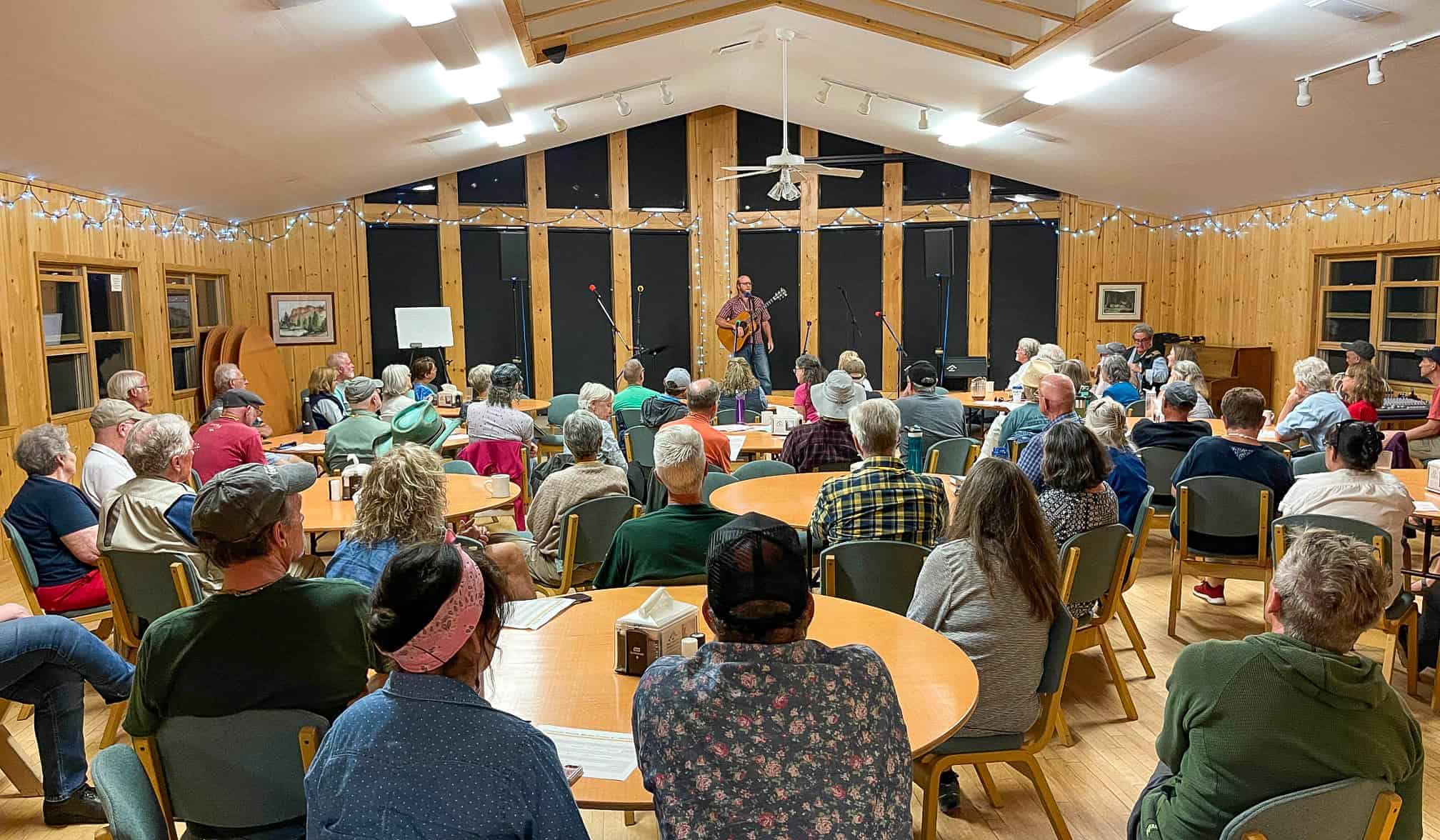
Activities
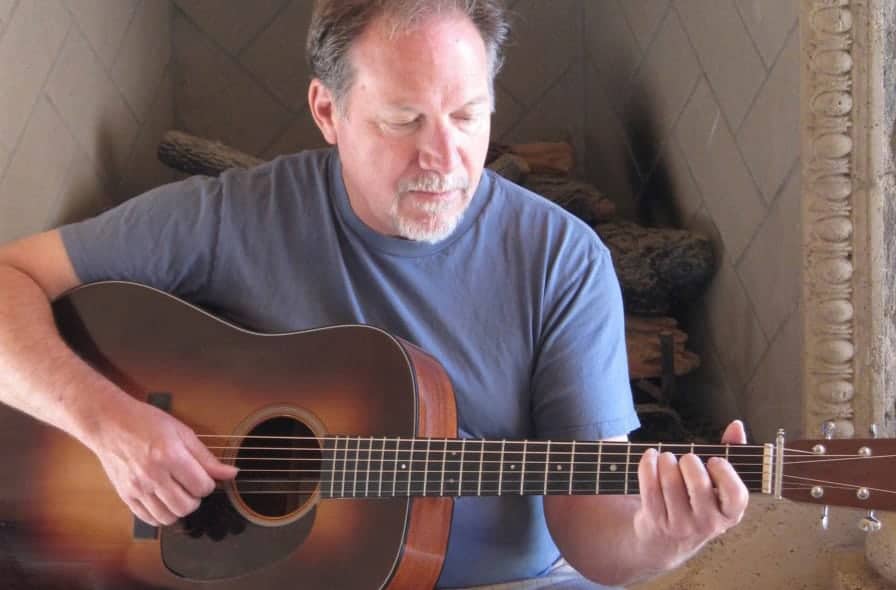
Daily Instrument Classes
taught by professionals
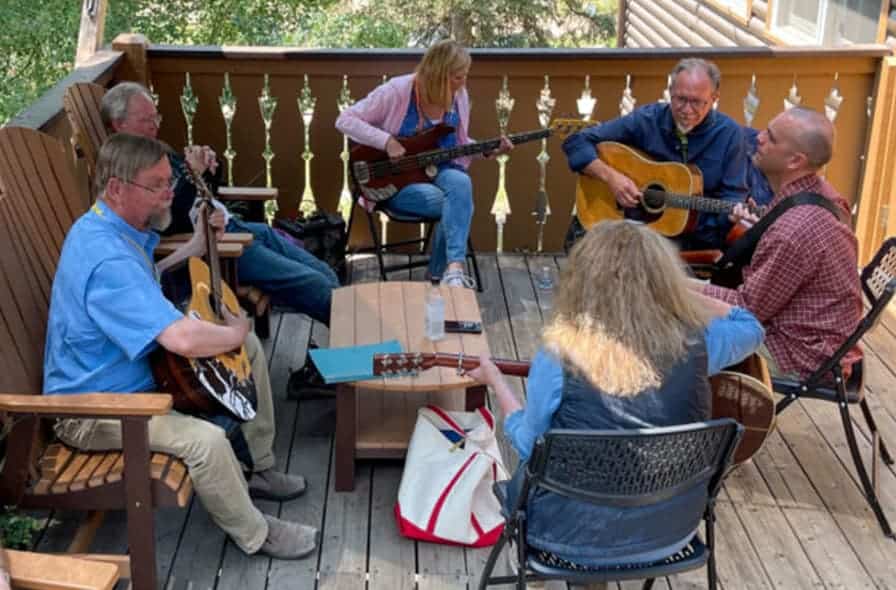
Daily Jams & Music Circles
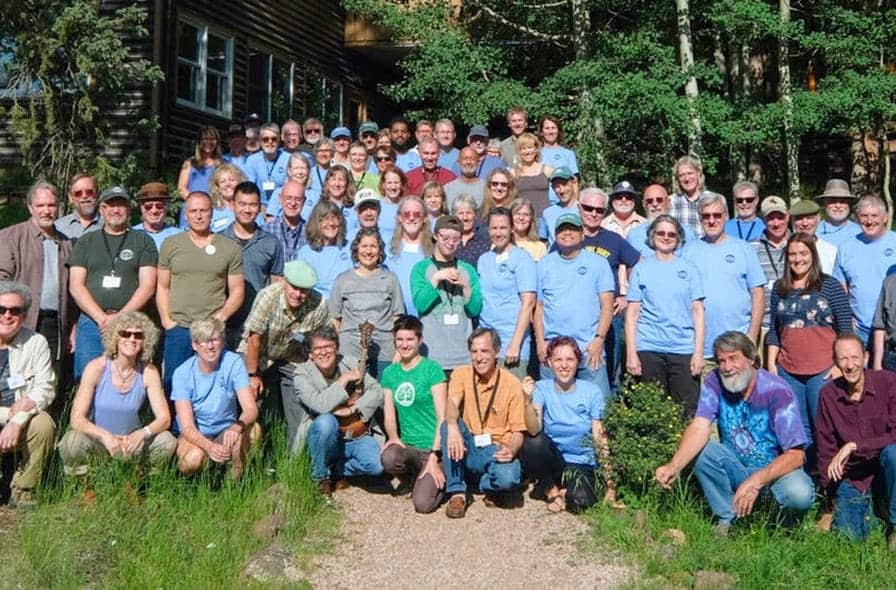
Band Scramble


Daily Class Schedule
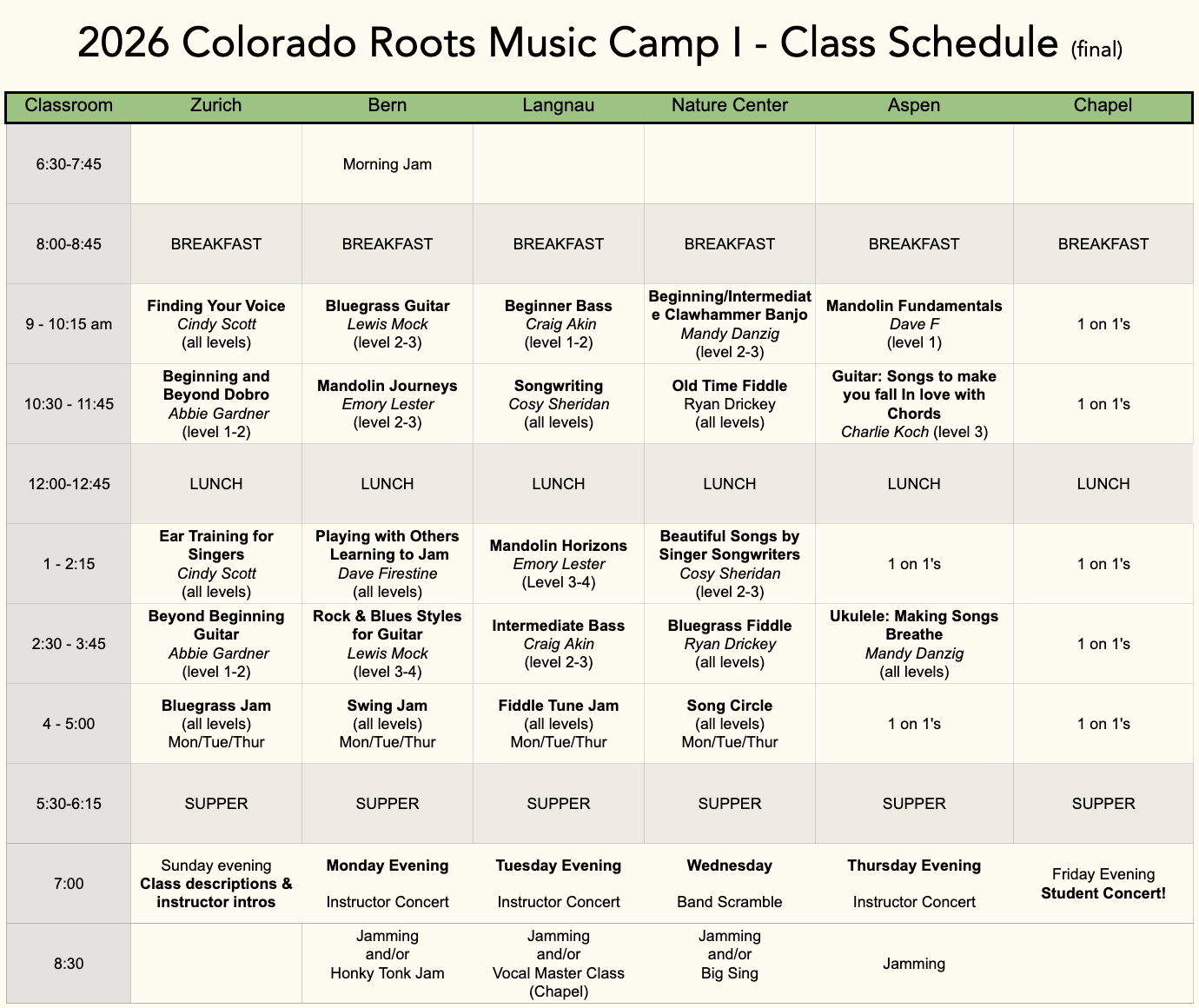
2026 Instructors & Class Offerings
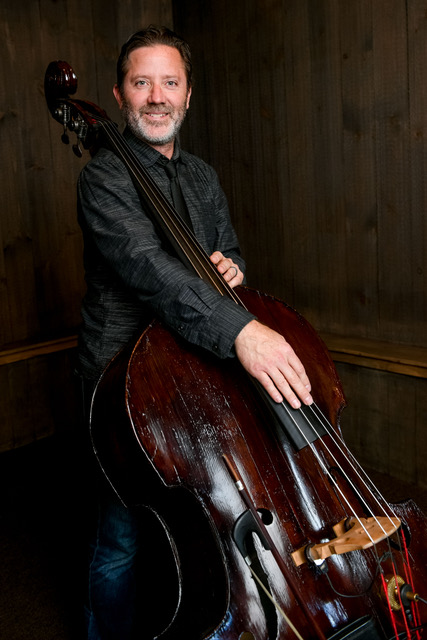
craig akin
Beginner Bass (Level 1-2)
Are you new to the upright bass or want to sharpen your skills?
In this class I will show you where the notes are in the common keys and how to get a good sound. I will give you tips for jamming and discuss the roll of the bass player in a group. You’ll learn basic hand technique and posture, and develop good habits to take with you.
But will we be playing in class? YES, absolutely. We will play along to recordings of easy popular songs often called in jam sessions. By the end of the week you will have a basic understanding of the instrument and have the skills to jam along with friends.
Intermediate Bass (Level 2-3)
Do you already have experience with the bass and want to dive deeper?
Here we will get into different styles of bass playing including swing, blues, country, waltz, bluegrass, and Latin. I will show you how to get a good sound out of the bass and with good intonation. We will discuss hand technique, the concept of rhythm and playing with a metronome, plus basic theory and how it helps in a jam session. Speaking of jamming, I will show you basic tools for soloing so you’re ready next time they say “bass, go for it!”.
We will play along with recordings of the different styles mentioned above. By the end of the week you will have better intonation, technique awareness, and knowledge of different styles, soloing basics, and hopefully some good calluses!
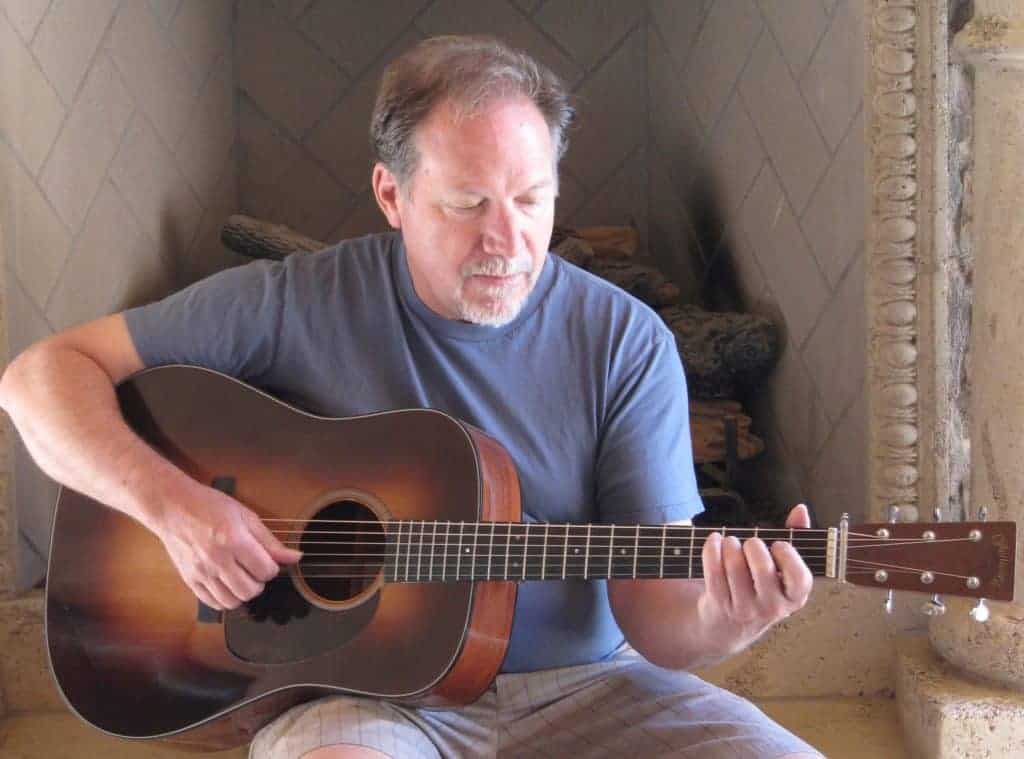
John Corzine
Man/Human on the porch – A unique feature of Colorado Roots Music Camp, this position is dedicated to jamming with campers, playing along with their songs or teaching a new tune. Often, there are treats from the kitchen.
John Corzine has been part of the southern California acoustic music scene for more than 40 years. Festivals and contests, Disneyland and dance floors, coffee houses and concert halls — John has performed throughout the southland, having gathered a collection of some of the best bluegrass, old-time, country and folk music you’ll find. Influenced and inspired for life by meeting Doc Watson at age of 9 years old, John spent his early years in local flatpicking and clawhammer banjo contests and began performing bluegrass and old-time music professionally shortly thereafter. John performed and toured with Philo/Flying Fish recording artists Jim Ringer and Mary McCaslin, and was featured on Mary’s A Life and Time album.
John has played in many area bands over the years, often with his wife Peggy Corzine on bass and vocals. John and Peggy currently perform with their youngest son Cody as the Corzines, and you can hear him this summer with the Coyote Brothers at the California Bluegrass Association’s Father’s Day Festival in Grass Valley, CA.
John comes to Camp to share his teaching and performing experience in the use of the guitar as a lead instrument, as the rhythmic foundation in a bluegrass and old-time band setting, and as the melodic and complementary background to vocal performance. (Last update 2021)
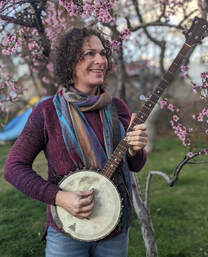
Mandy Danzig
Ukulele: Making Songs Breathe (All Levels)
This class dives into what makes a ukulele arrangement work. We’ll focus on strumming patterns, rhythmic accents, and the subtle choices that help a song rise, fall, and truly breathe. You’ll learn how to build a song from the inside out, adding contrast, texture, and movement so your playing stays engaging for both you and your listeners.
Players of all levels are welcome. Beginners will find clear, accessible ways into each concept, while more experienced players will discover new layers of intention and expression. The goal is simple: to help you make music that feels good to play and meaningful to share.
Old-Time Banjo: Getting the Groove and Frailing With Confidence (All Levels)
Always wanted to play old-time banjo but were afraid you might frail? (It’s a banjo joke.) Bring (or borrow) a banjo and come learn how to build a tune clawhammer style. We’ll cover the essentials of old-time banjo: the clawhammer strum, the strange and wonderful world of banjo tunings, and how tunes are actually put together.
Along the way, we’ll break the technique down into small, manageable pieces so it makes sense in your hands then put it all back together into music that grooves. Beginners will leave with enough skills to back themselves (or a friend) on a song or sit in on a local jam, while intermediate players will have space to tighten technique, improve efficiency, build speed with less effort, and develop some arranging skills.
This class is a warm, supportive home for beginners and a tune-up and exploration space for more experienced players. Guitar players and Scruggs-style pickers are welcome. The right-hand motion is like nothing you’ve done before. It tends to put a grin on your face and drive away the kind of folks you probably didn’t want to know anyway.
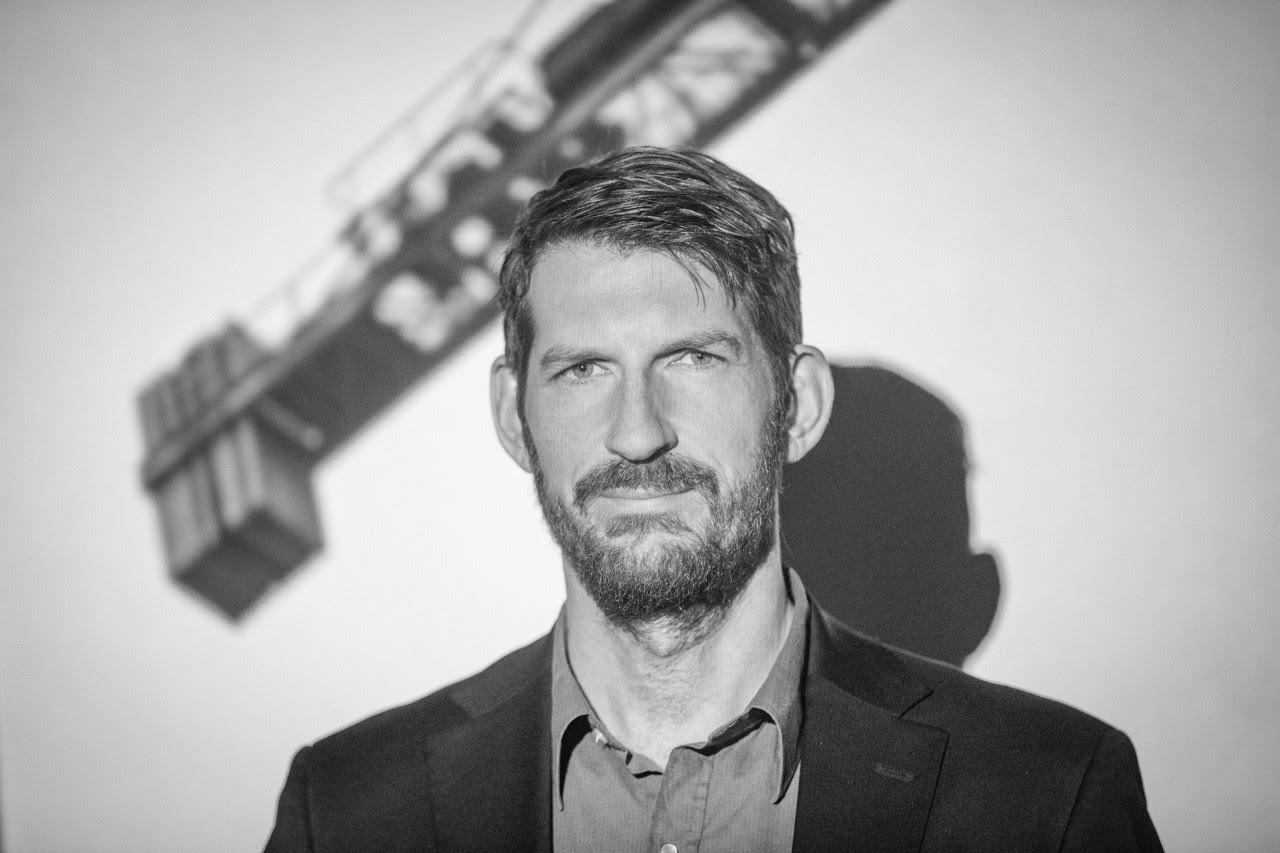
Ryan Drickey
Old Time Fiddle (All Levels)
Old Time style fiddling is a community music making experience where everyone plays together the whole time. No solos! No stress! It’s all about getting a great rhythmic feel with the group while riding around the roller coaster of a tune. In this class I’ll teach a tune by ear each day in a call and response style. We’ll work on making the tune groove with a few traditional bowing patterns, and have a lot of fun playing together.
Bluegrass Fiddle (All Levels)
Bluegrass is performance-focused traditional music that showcases individual musicians in the band. The fiddler has a chance to step into the mic and show off a little. In this class we’ll focus on constructing a fiddle break or kickoff based on the melody of the song. We’ll work on making things sound stylistically appropriate and adding to our fiddle bag of tricks. We can also touch on playing fills behind the singer, and how to play well with others.
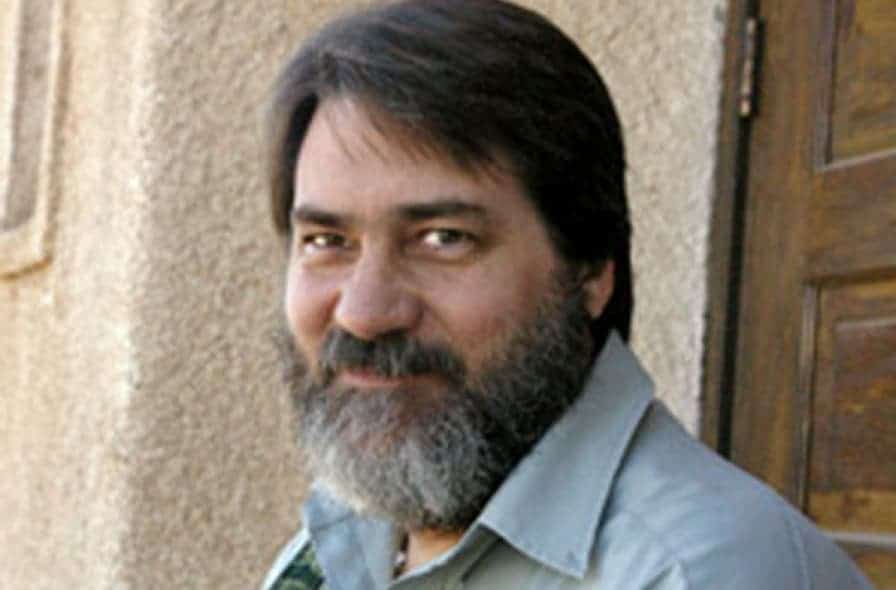
Dave Firestine
Mandolin FUNdamentals (Level 1)
This course is designed for the beginning mandolin player. No experience required. However, if you are a more advance player and want to review some fundamental techniques, this is the perfect opportunity. We will begin with stretching, breathing, relaxing, and remembering to have fun! I will check your mandos for correct setup, strap setup, holding the mando and the pick. We will spend time playing with the proper pick direction, giving you the secrets to playing smoothly and at speed. We will learn some easy tunes, practicing the techniques described above. Join us for some fun, no shoes required.
Playing with Others – Learn to Jam (All Levels) and Instruments
In this class, we will discuss and create the many ways that we can share music with humans and others. Bluegrass jams, Old Time jams, Irish sessions, Swing, and…who knows. The idea is to understand jams better so we can contribute to the fun. Bring instruments and we will create an environment this is welcoming and safe. Discover what your ability on your instrument, even if you are a beginner, can enable you to participate and contribute to the celebration of music. Let’s pick!
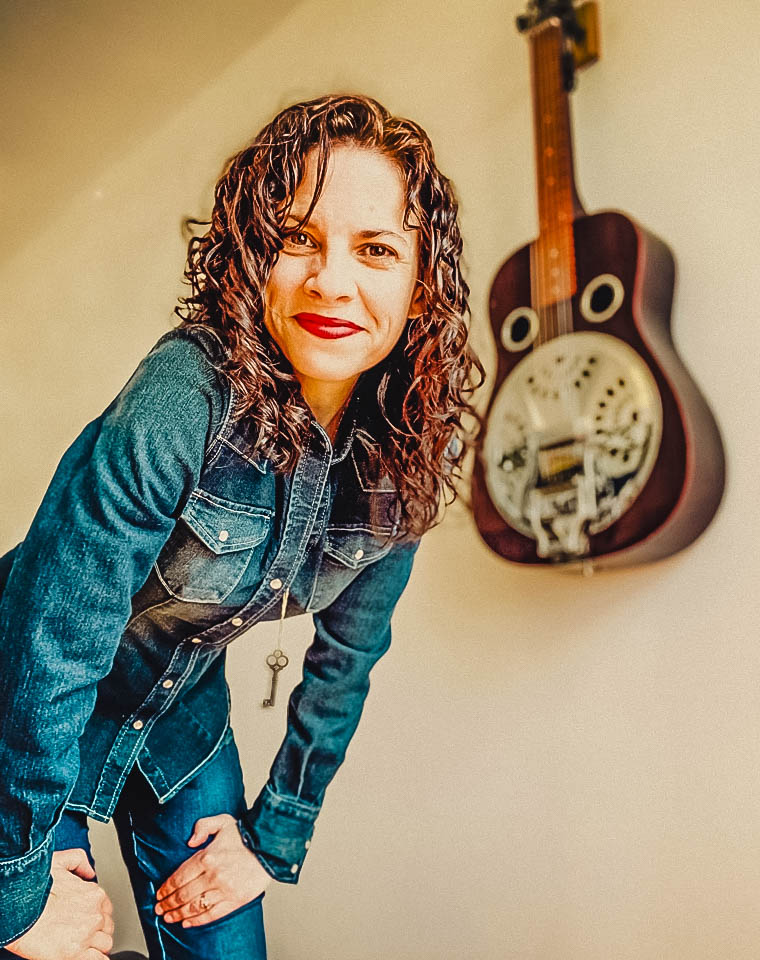
Abbie Gardner
Beyond Beginning Guitar (Level 1-2)
This class is great for folks who can play some chords on guitar, but want to take the next step and get more out of their playing. We’ll focus on small changes and easy techniques that make a big impact. These will include: Hammer-ons, walking up to a chord, fingerpicking, playing in drop D, chord substitutions, changing keys easily, capo logic, getting rid of “spider” fingers, muting and exploring different grooves. Each skill will be repeated and practiced in class in the context of a song, so you’ll walk away with a solid “toolkit” by the end of the week!
Beginning & Beyond Dobro (Level 1-2)
Love the sound of the lap-style slide guitar but not sure where to start? This class will get you set up and playing by the end of the week! Folks who are beyond beginners are welcome too – we’ll gear the class to the level of participants. We’ll find our way around melodies and chords using the classic Dobro G-tuning. If you have a square neck resonator guitar, bring it! If you don’t, you’ll need to bring a regular guitar to temporarily “convert” to lap style playing. You’ll probably want to leave it set up this way all week, so bring an extra guitar for other classes & jams.
Equipment required: A “Nut raiser” and a solid metal slide bar. We’ll have a limited number of slides and nut raisers to borrow and/or purchase, but it’s even better if you can get them ahead of time! Links & options below.
BAR (good for anyone with arthritis): https://amzn.to/
BAR: (basic, good company) https://amzn.to/
BAR: (less expensive option) https://amzn.to/
NUT RAISER: https://amzn.to/
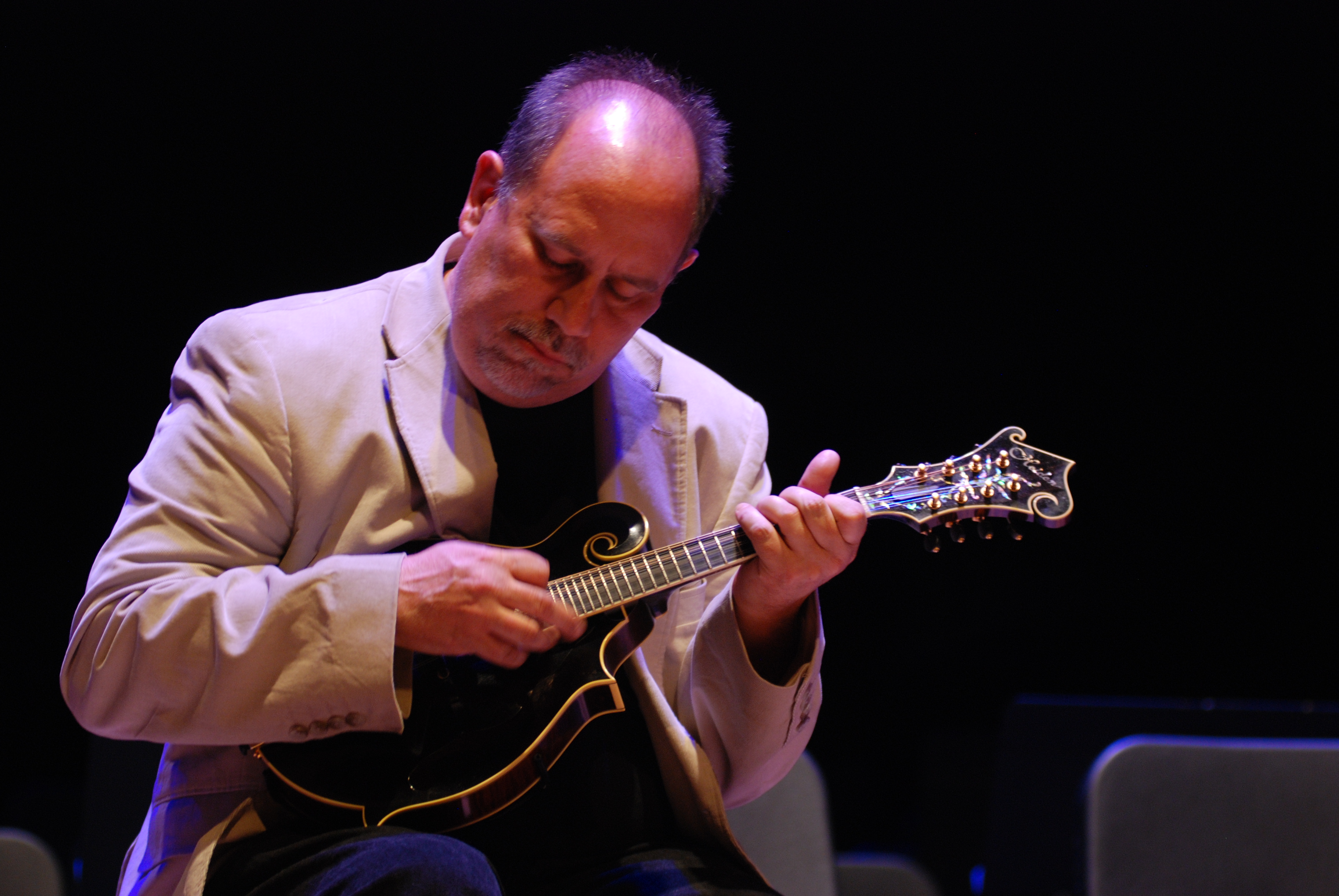
Emory Lester
Mandolin ‘Journeys’ (Level 3-4)
This intermediate mandolin level class will focus to help you improve on many areas of your playing, and will help with understanding goals and improving your experience in practicing, and playing with others at moderate tempos. The class will work with popular tunes and known examples, and will focus on subjects such as becoming comfortable with chords and rhythms, optimized technique to build for success, managing ‘tension’ and ‘energy’ in yourself and in your playing, the ability to find melodies by ear, as well as the study of playing with others in a jam or small group setting, and will set a roadmap for future improvement, learning and enjoyment. Handouts will be provided and recording for personal use is welcome.
Mandolin ‘Horizons’ (Level 4-5)
This advanced mandolin level class will touch on ‘expanding’ upon all you have learned, and focus on all areas of the mandolin as it relates to playing different styles of music. We’ll explore several styles of music, and the mandolin’s role in each. Subjects will include the study of ‘time’ and how to control and use it effectively, the study of song and melody ‘presentation’, advanced techniques and practice regimens, the study of ‘improvising’ and ‘creativity’, the art of ‘listening’ and ‘reacting’ in any situation or setting, and setting a roadmap for future improvement, learning and enjoyment. We’ll explore several styles of music, and the mandolin’s role in each. Handouts will be provided and recording for personal use is welcome. Did I mention we will learn about playing ‘fast’ and ‘faster’?
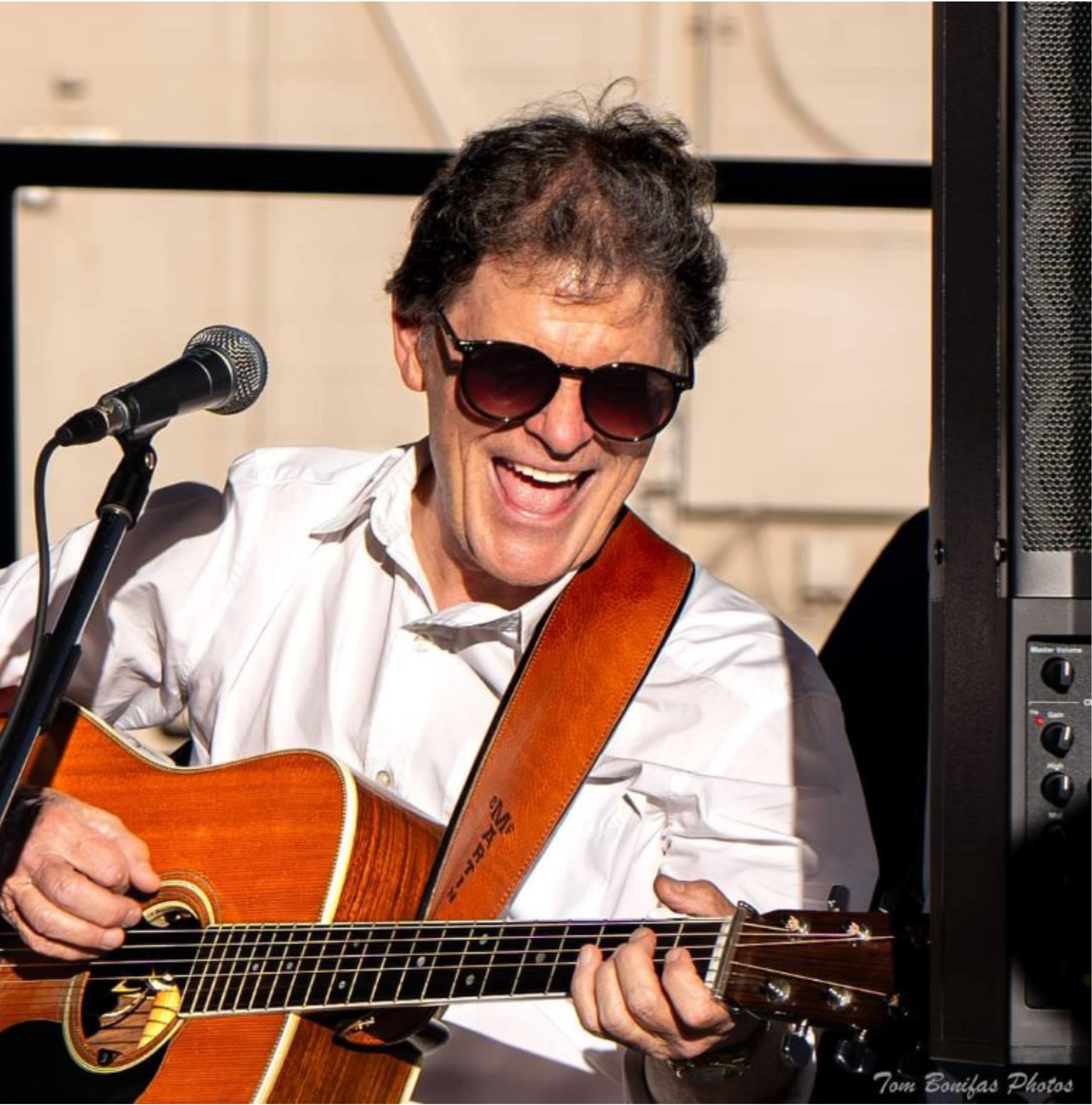
Lewis Mock
Bluegrass Guitar (Level 2-3)
Powerful and exciting, from bass runs to big chords, bluesy licks to fiddle tunes, bluegrass guitar has its own unique sound and vocabulary. We will be discussing all of these topics and building a foundation for taking your playing to the next level. Bring your guitar, a fairly stiff flat-pick and an open mind, ready to take it all in!
Rock and Blues Styles for Acoustic Guitarists (Level 3-4)
Many classic rock and blues sounds can be incorporated into your acoustic guitar playing to open up the instrument, such as using electric guitar licks and chords or piano sounds to spice up your arrangements. Being able to add a cool solo or more interesting background for your singing can really widen your palette. Most of the the rock and blues sounds are based around common chords that you already know! I’ll show you some really cool stuff and we’ll make you a much better and more rounded guitar player!
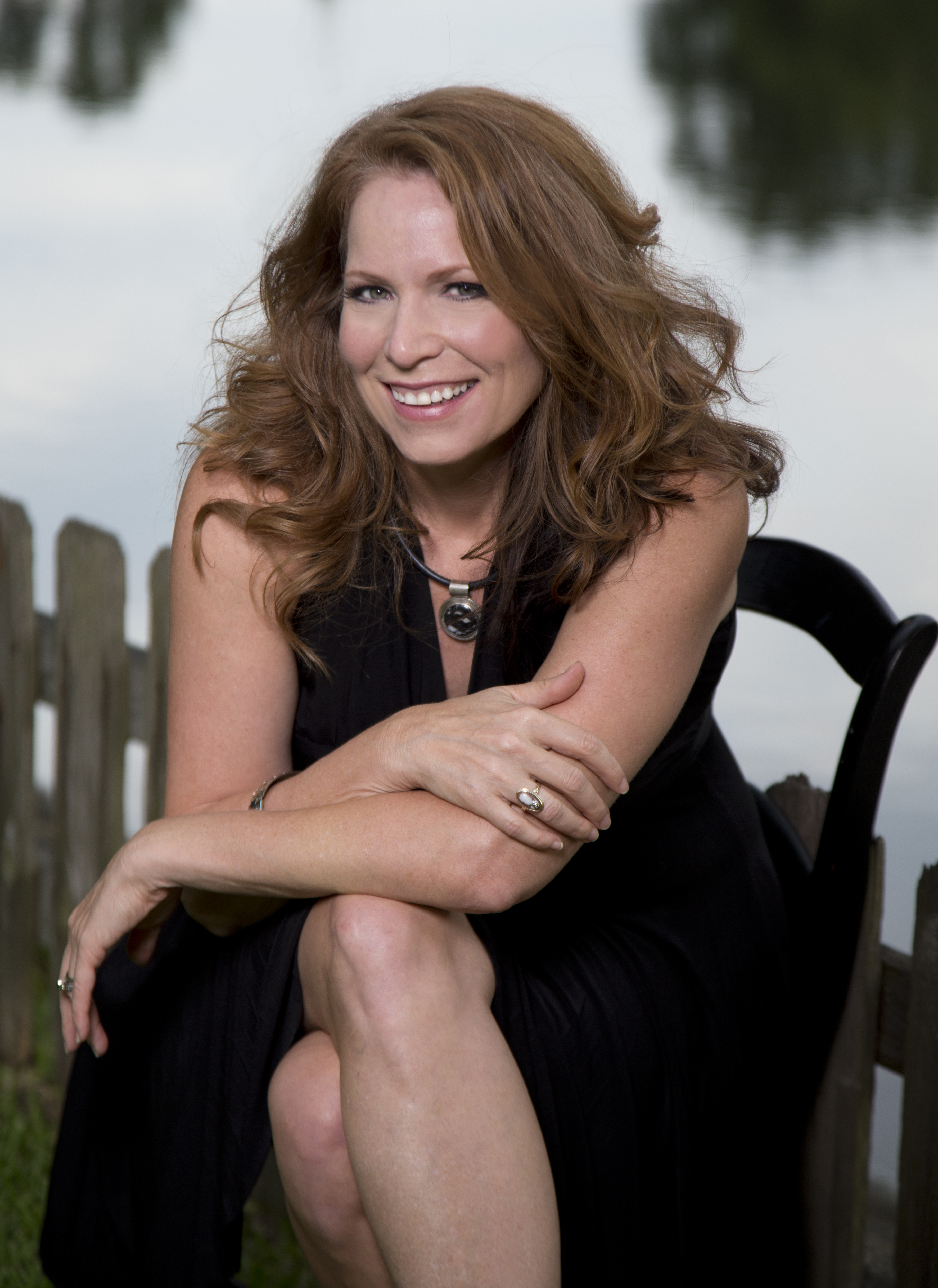
Cindy Scott
This class will give you a much better understanding of the voice as its own instrument. You will learn how to develop more power and control throughout your range OVER TIME, but there are likely to be some instant improvements, too. We’ll explore how the voice actually works and how to develop range, flexibility, and power safely. Common concerns such as vocal strain, singing through your “break,” and other challenges singers face will be addressed in a supportive, practical way. All levels welcome. No class limit.
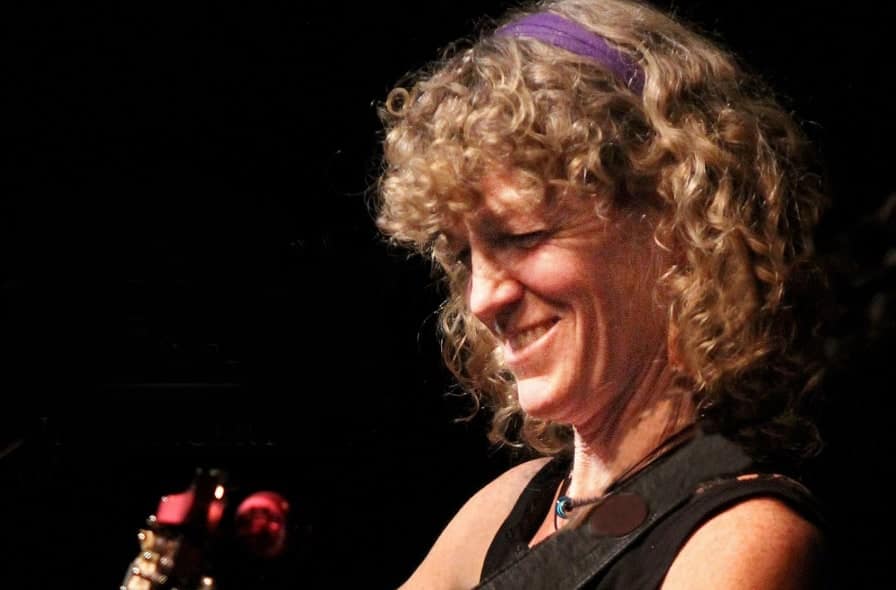
Cosy Sheridan
Songwriting (All Levels)
Join me in a week of creative discovery as we look at the art and the craft of songwriting. The art is our emotions, memories and intuition. The craft is the skills we can learn – the tools in the toolbox. How do we find the story and then how do we turn the story into a lyric; where do we go to find a chord progression; how do we build our melody? In this class we will begin the week looking within to find the kernel of our song, and then we will look out at the songs of other songwriters – skilled technicians – and see what we can learn from their songs. Bring your instrument, something to write with, and a way to record your song-in-process (an iPhone works just fine). All levels welcome!
Beautiful Songs By Singer Songwriters (Level 2-3)
We can build our guitar skills while learning some beautiful songs by some of my favorite singer-songwriters. We will learn some skills for both the right and the left hand: bass runs, picking patterns and some simple riffs. Songs to sing when you’re alone in your room, or at the next song circle. We learn both right hand and left hand with each song.
Assistant to the Director
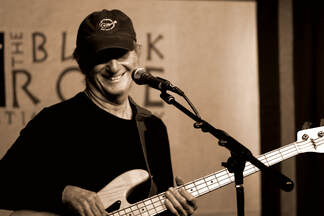
Charlie Koch
Songs To Make You Love Chords (Level 2-3)
In this class we will play songs that I hope will seduce you into learning some chords that until now may have been a mystery to you. We will look at voice motion within a chord and how it adds harmonic interest to a simple progression. We will learn different ways to move from one chord to another using bass runs and chord inversions. If you know how to play major chords, minor chords, and dominant seven chords, and some bar chords, then this class is for you!
Jam Classes & Informal
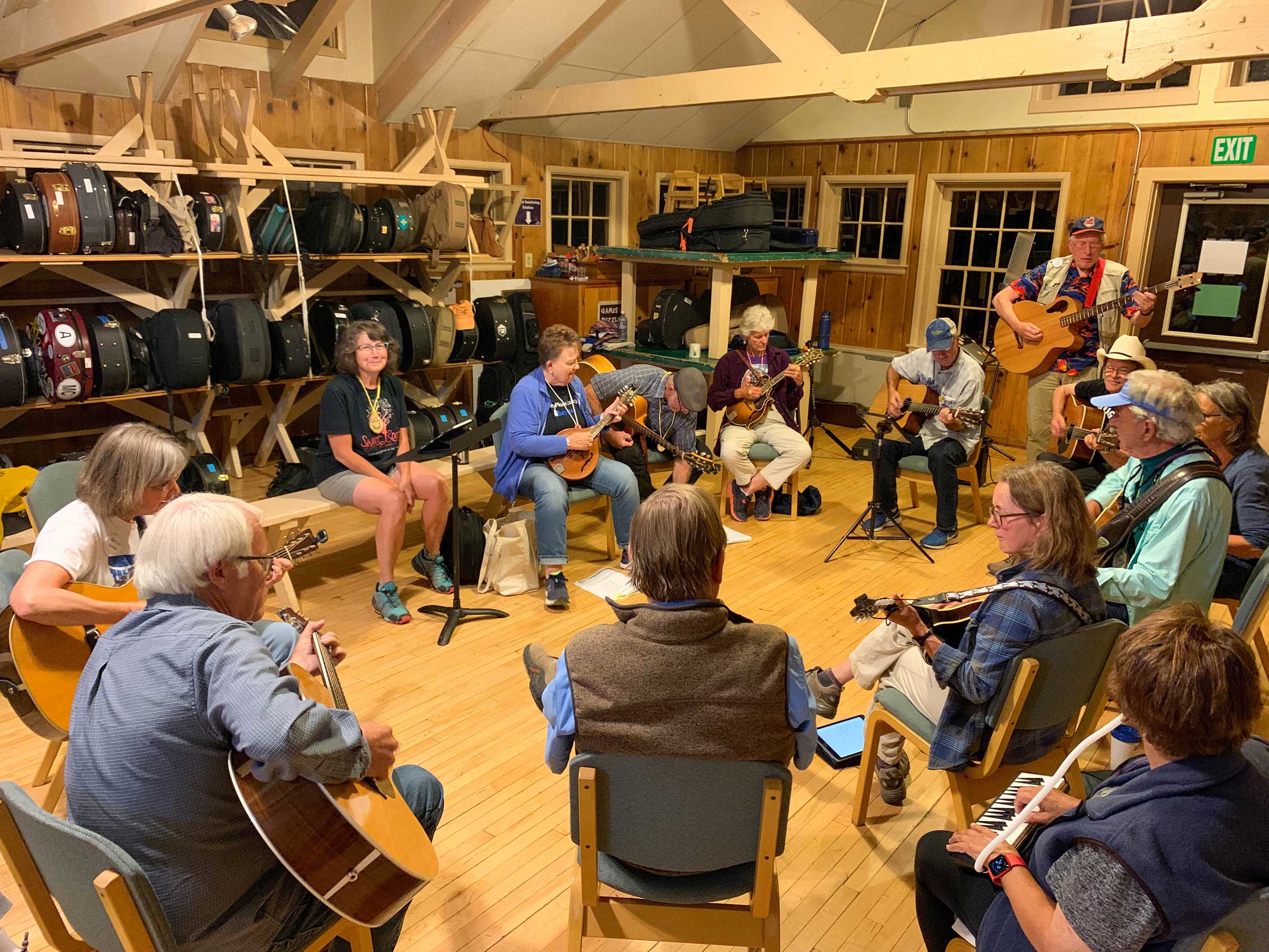
There will be jam classes and a lot of spontaneous jamming during the camp, so join in as they are big fun. If you’re a newbie and experiencing the (unfounded) “Jam Fear” that everyone does, don’t be intimidated. Everyone experiences Jam Fear when they start, if they have any sense. At first it may be a little scary, but it’ll soon turn into a lot of fun. Some reasons you might hesitate:
- “They’re going to hear me mess up.” No, they’re all busy trying to do their own thing. Very rarely in the average jam does anyone even hear the stuff you’re doing, since they’re worried about their own.
- “I’ll make mistakes.” Yes, you will, as everyone does, and if you’re not beating the daylights out of your instrument, you’re the only one who will hear them.
- “I’ll be put on the spot.” No, in a jam, you can always choose to hang back. If anyone calls on you to take a solo, a shake of your head is a perfectly legitimate response.
- “I can’t keep up.” Maybe so, maybe not. If you can’t, you can still play the chords or notes that sound OK to you as the music passes by.
The fact is that just like that cold water, it’s sometimes a bit scary to jump in the first time, but once you’re used to it, you’re telling everyone that they should jump in; what a bunch of weenies! Please, give the jams a try which may include: Swing Jams, Slow Jams, Bluegrass Jams, Acapella Jams, Honkey Tonk Jams or Old Time Jams.
Registration Fees
Online registration opens one year prior to the retreat.
Camp Staff
Cosy Sheridan, Co-Director
Cosy Sheridan has been called “one of the era’s finest and most thoughtful singer-songwriters.” She first caught the attention of national folk audiences in 1992 when she won both the Kerrville Folk Festival’s NewFolk Award and The Telluride Bluegrass Festival Troubadour Contest, then released her critically-acclaimed debut CD Quietly Led on Waterbug Records. She has released nine CDs, her music is featured in the Robert Fulghum multi-media novel The Third Wish and she tours consistently throughout the US. Her concerts are wide-ranging explorations of modern mythology (meet Hades the Biker), love songs for adults, contemporary philosophy for the thoughtfully-minded and her signature parody on aging and women. Throughout this journey, her lyrical dexterity is backed by her distinctive, percussive bluesy-gospel guitar style. A guitar student of instrumental luminaries such as Guy Van Duser and Eric Schoenberg and a voice student at The Berklee School of Music, she brings a depth of experience to her craft. For the past 18 years, she has taught classes in songwriting, performance and guitar at workshops and adult music camps across the country including The Puget Sound Guitar Workshop and The Swannanoa Gathering. In 2008 she co-founded The Moab Folk Camp.
Dave Firestine, Co-Director
Dave pulls out the “take no prisoners” style of playing at every dance – bringing the tunes to their full potential and beyond. He is a tune-meister and music jams are super fun when he is in the driver’s seat.
Originally a drummer, his strong sense of rhythm and syncopation is the foundation of his playing and tune writing, and truthfully he is never happier than when he gets to pull out the laptop drum kit to back swing and honky tonk tunes. Don’t worry, he can access his sensitive side when playing waltzes and beautiful melodies.
Dave is a music vagrant retiree now, but before that, he was Senior Gyzmologist building lightning detection systems. He is currently playing with the dance bands STEAM! (www.dancetosteam.com) and The Privy Tippers.
Charlie Hall, Founder
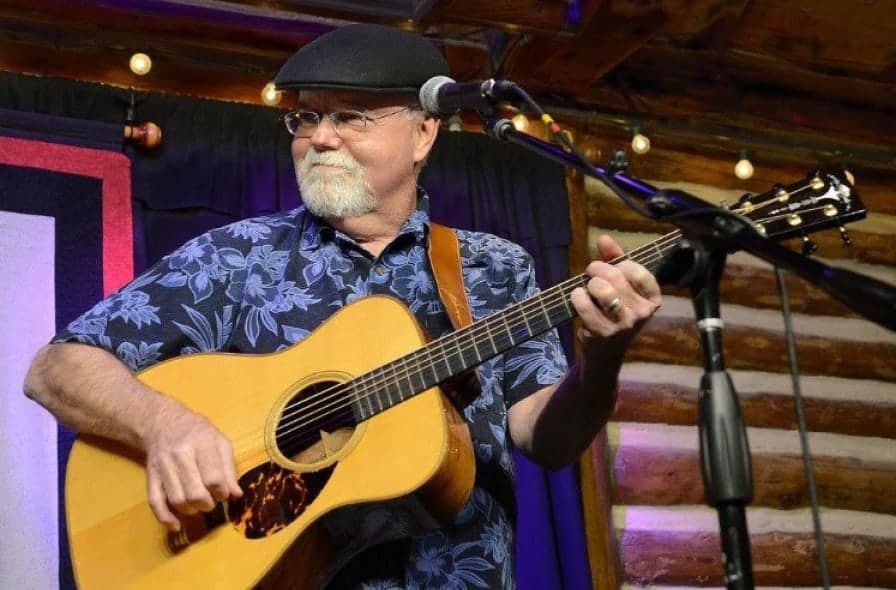
After earning a bachelor’s degree in Music Education with emphasis in French horn, Charlie Hall started out as a member of the 6th US Army Band in San Francisco. When real life reared its ugly head, he found he needed a day job, which he found in computers from 1983 to 2003. From 2003 to his retirement in 2017, he was a full-time guitar, mandolin and bass teacher. He’s taught high school band as well as classes in beginning guitar, fingerpicking, bluegrass guitar, music theory and jamming. Charlie was a founder and driving force of the Black Rose Acoustic Society in Colorado Springs, a favorite destination for roots musicians and roots music fans. He performed for ten years with the popular folk/bluegrass band Black Rose, was a finalist in the 2000 National Fingerpicking Championship and was nominated Bluegrass Guitarist of the Year in 1996 by the Colorado Bluegrass Music Society. With his wife Marianne Danehy, Charlie was creator & co-director of the Colorado Roots Music Camp from 2006-2017. He and Marianne are thrilled to hand off management of the Roots Camp to the folks at the Rocky Mountain Mennonite Camp as well as Cosy Sheridan and Raul Reynoso.
December 11, 2018, we said goodby to Charlie who passed away after a valiant battle with brain cancer. He leaves behind a large legacy of music and education and those who knew him are better for it. May we all carry on his legacy of life, love and life-long music!
Marianne Danehy, Founder
Marianne Danehy discovered “her people” around 2002; that is, those who played roots music. From 2005 to 2014, she taught violin and fiddling in Colorado Springs, and is a registered instructor with the Suzuki Association of the Americas. Undaunted by two degrees and a former life in Mechanical Engineering and Mathematics, she’s the mother of two nearly-grown kids, William and Anna. Marianne is an excellent teacher and an expert at getting folks started both on violin and fiddle styles. From 2006-2017, along with her husband Charlie Hall, she was co-director of the Colorado Roots Music Camp.
Alumni Staff
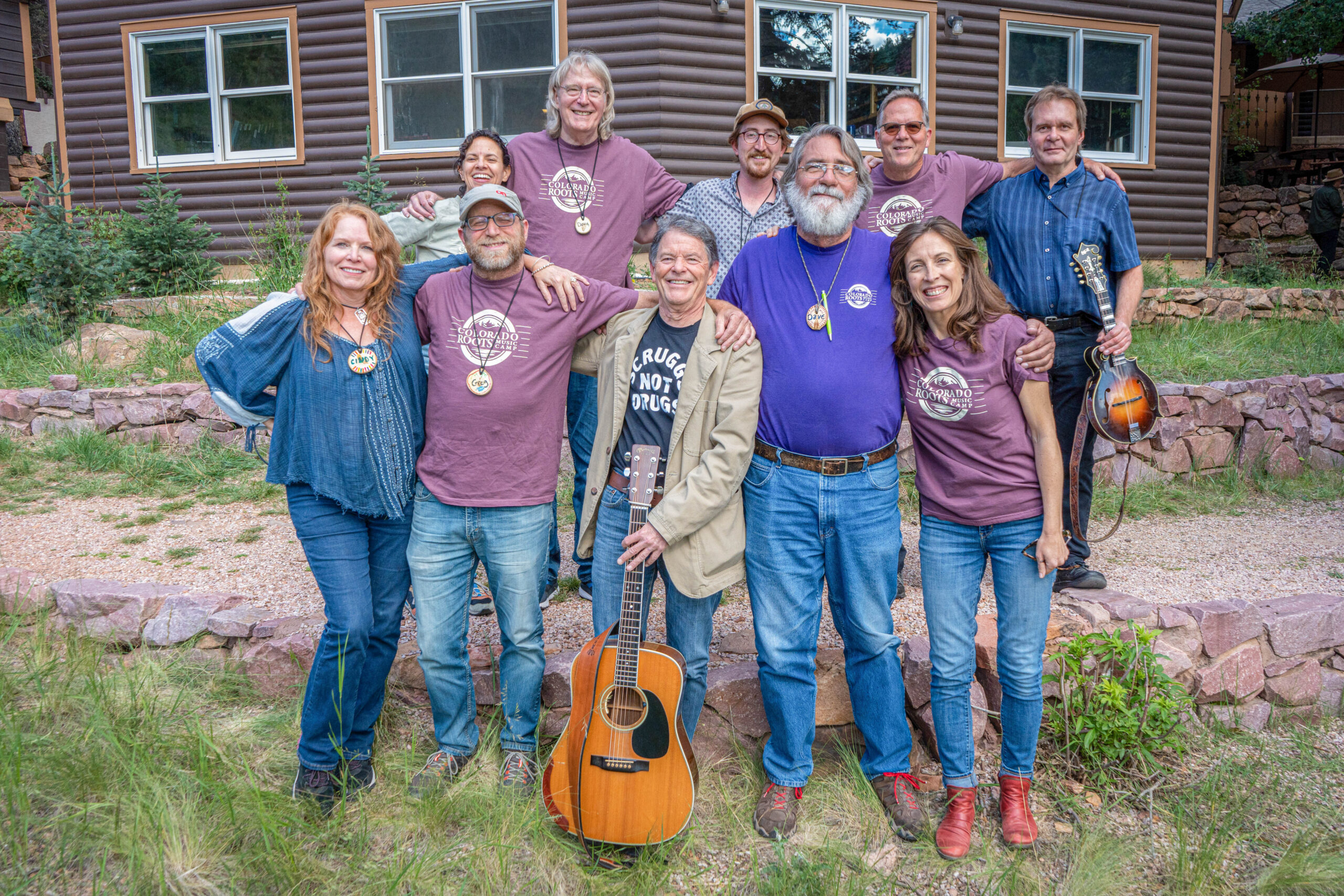
Colorado Roots Music Camp has enjoyed wonderful and talented instructors over the years since its beginnings in 2006. Our thanks to them for thier part of the rich legacy and music community created each week.
Frequently Asked Questions
Do you have to be Mennonite to enjoy a week at Rocky Mountain? Who are the Mennonites?
While you’ll be at a Mennonite Camp and hanging around with Mennonite staff and volunteers (some camp participants), folks from all walks of life and faith are respected and welcome to attend. Who are the Mennonites?
Where can I learn more about my stay at RMMC (i.e. accommodations, altitude, creation care).
Please visit the “Reservation Guide” page of the Rocky Mountain website for “YOUR STAY WITH US”, “MOUNTAIN LIVING” & “CREATION CARE” information.
What foodservice is offered? Can you accommodate dietary restrictions?
Camp is pleased to offer a great selection of food choices (View Food Service) which include a main dish option, vegetarian option, salad (lunch & supper), and dessert (lunch & supper). Cold beverages (water, orange, apple, grape, crabapple) and hot beverages (coffee, tea, hot chocolate) are also provided.
As much as possible, the camp will accommodate dietary restrictions. An option will be given to list all of your dietary restrictions during registration. We cannot accommodate dietary preferences.
RMMC is not a peanut/nut free location since we serve a variety of campers and guest groups utilizing their own kitchen facilities.
If flying in from Denver (DIA) or Colorado Springs (COS), how can I get to camp?
Transportation to camp can be done via Uber or other hired transportaition OR if someone you already know is coming can offer you a ride. Frequently, after a week of good music and fellowship, folks have found a ride to Colorado Springs or Denver from people already heading that way.
If flying, it’s hard to beat the Colorado Springs airport (COS) as the closest airport to camp. Of course, ticket prices are what they are and you might find a better rate into Denver International Airport (DIA). Groome Transportation offers shuttle service between Denver and Colorado Springs for around $55 each way).
Connect with other students – Visit the Colorado Roots Music Camp Facebook Page to share your need for a ride AND to share your willingness to offer a ride both to and from Rocky Mountain.
Can visitors be invited to Roots Music Camp during my stay?
Only campers and their paid companions are allowed at the camp. Limited guest tickets (5-10 or so) are available on a first come/first serve basis for someone you’ld like to bring to an evening concert ($15/person) and share the evening with. Be a good friend to Roots Music by inquiring about availability with the Roots office staff the day BEFORE your visitor might come. Family and/or friends welcome to come for the Friday night student concert.
What is the Charlie Hall Scholarship Fund?
As the founder of Colorado Roots Music Camp, Charlie Hall was a trail blazer in bringing quality music instruction to the Pikes Peak region. In pursuit of this, he also gathered informal scholarship money to support younger students who were unable to financially afford attendance at Roots. In recognition of this forward thinking approach to growing young musicians, the Charlie Hall Scholarship Fund was officially launched at the end of the June 2018 camp. Rocky Mountain Mennonite Camp (RMMC), which has been home to Roots since its beginning in 2006, has taken the opportunity to continue Charlie’s outreach by formalizing the scholarship. As a 501(c)3, RMMC is able to offer a charitable receipt for contributions to the scholarship fund. GO DONORS!
- How to give: Donors can support the next generation of musicians by writing a check to Roots Music Camp earmarked “Charlie Hall Scholarship Fund” and sending to: Roots Music Camp, 709 County Rd 62, Divide CO, 80814. Donations accepted by credit card as well by calling the camp office (719-687-9506).
- Note: Gifts of instruments or quilts (past examples) or other marketable items are welcomed. If item is accepted, Roots Music will facilitate sale (i.e. raffle, silent auction, etc.) with 100% of proceeds going to support scholarship fund.
- Who my apply: College age and younger (age 25), preference to first time campers.
- How to apply: Contact the Colorado Roots Camp Office by email at ([email protected]) for application details.
- Scholarship amount: Full Registration for Chalet, Rustic Cabin or Campground accommodations. Commuters too!
- Number of scholarships: As funds allow for student interest, our goal is for 1-2 scholarships per camp session. Unfortunately, if there are no donors, there is no scholarship. GO DONORS!
- Awarded Scholarships: Applications will be reviewed (Colorado Roots Music Camp Leadership Team) and scholarships awarded after April 1st or until available spots are filled.
What should I NOT bring to camp?
- Pets of all sizes (Note: if you have a disability, please contact camp)
- Firearms
- Alcohol
- Tobacco
- Illicit drugs
- Marijuana
- Dirt bikes
- Firework
- Four Wheelers
- Drones